The quality of a plastic part is determined long before the first molding cycle begins. It depends not only on the properties of the polymer or the injection molding machine settings, but primarily on a properly designed injection mold and a carefully prepared manufacturing process.
Design errors can result in part deformation, uneven shrinkage, defective products, and costly mold modifications. Therefore, professional process preparation is the foundation of successful high-volume plastic injection molding.
Material Selection
The first stage is selecting the appropriate polymer. Each material has its own processing characteristics, including melt processing temperature, flowability, shrinkage rate, and mechanical properties.
For example, amorphous plastics generally exhibit lower shrinkage, while semi-crystalline materials provide better flow characteristics but require more accurate compensation for dimensional changes during cooling. These properties directly determine the geometry of the injection mold.
Injection Mold Design
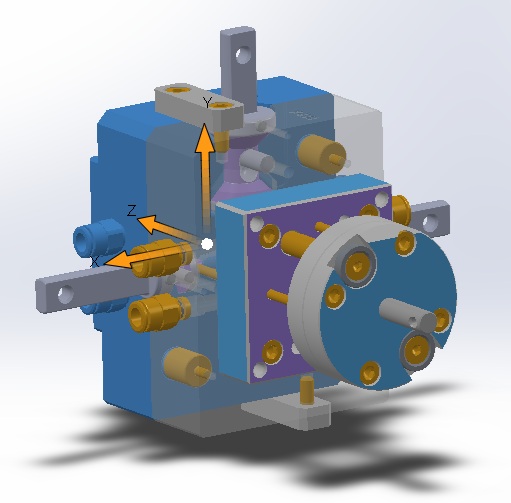
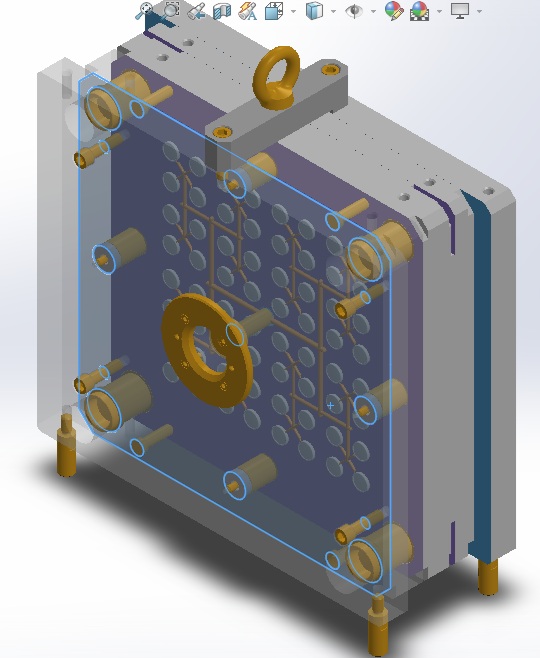
During the design phase, engineers take into account material shrinkage, cavity filling behavior, and required dimensional tolerances. Modern CAD systems enable the creation of an accurate 3D mold model and allow dimensional compensation before manufacturing begins.
Equally important are the design of the runner system, the proper location of gates, and the venting channels. Insufficient venting can lead to incomplete cavity filling, burn marks, and internal part defects.
Cooling System – The Key to Stable Production
One of the most critical components of an injection mold is the cooling system. It must provide uniform temperature distribution throughout the mold cavity.
An efficient cooling system makes it possible to:
- reduce the molding cycle time;
- minimize shrinkage and part warpage;
- maintain consistent dimensional accuracy;
- increase production efficiency.
The proper layout of cooling channels often determines the overall performance of the injection mold.
Ejection System
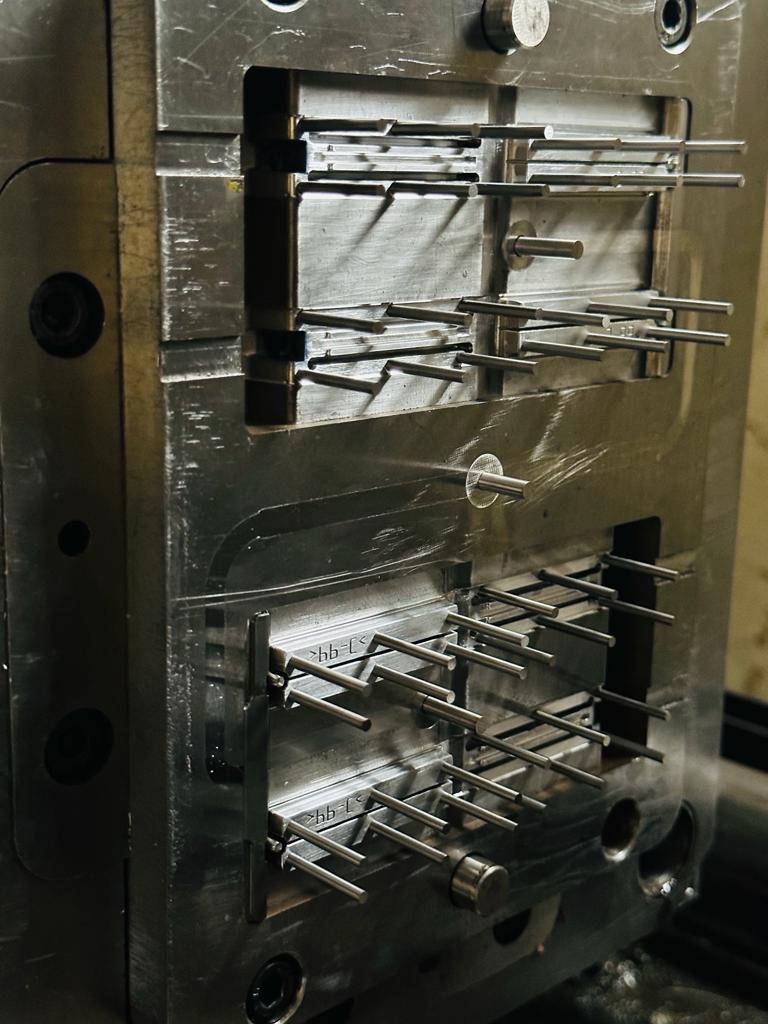
After cooling, the molded part must be removed from the mold without damage. This is accomplished using ejector pins, stripper plates, or other specialized ejection mechanisms.
The number, location, and design of these components depend on the part geometry, wall thickness, and material type. A properly designed ejection system prevents deformation and damage during part removal.
Mold Manufacturing and Trial Runs
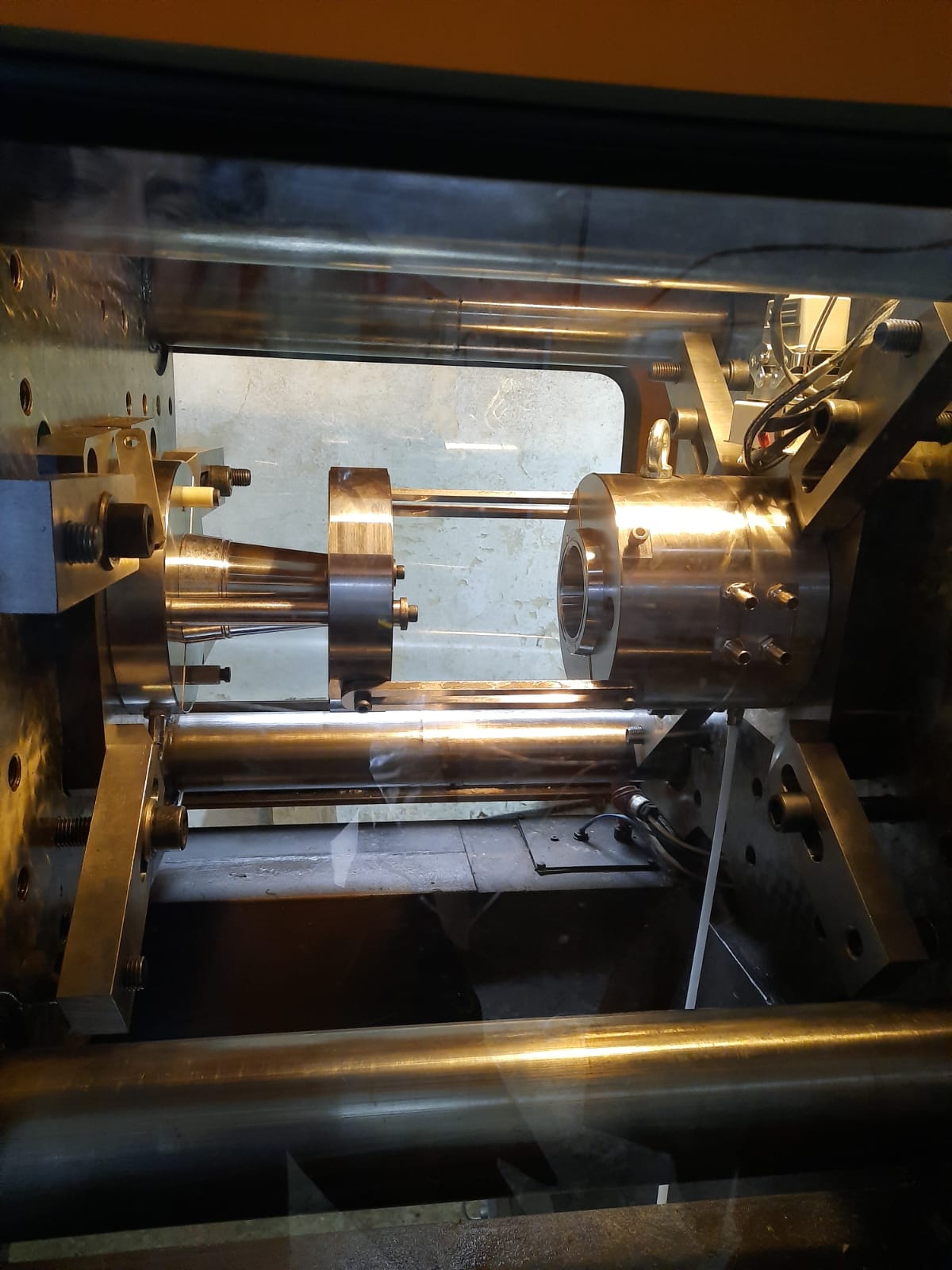
Once manufacturing is complete, the injection mold undergoes trial molding. During this stage, engineers evaluate cavity filling, cycle time, cooling system performance, and ejection efficiency.
If necessary, process parameters or individual mold components are adjusted. This approach makes it possible to eliminate potential issues before mass production begins and ensures consistent product quality.
KVOTA Experience
For more than 35 years, KVOTA has specialized in the design and manufacture of injection molds for plastic injection molding. We utilize advanced CAD technologies, standardized Proplastica components, and extensive engineering expertise in the development of complex tooling.
Our comprehensive approach—from part analysis and material selection to mold testing—enables customers to obtain reliable tooling solutions for high-volume production of precision plastic components with minimal scrap rates and a long service life.
Send your inquiries to: production@kvota.com.ua


